Until recently, Portugal was considered a relatively anonymous destination for tourists from Israel, but since it burst into the minds of travelers from the Holy Land, it is quickly climbing the list of popular vacation destinations and capturing their hearts. Too bad Ovidosh It is considered one of the most beautiful and recommended areas for a trip and the abundance of attractions, restaurants and cute corners make it perfect for a couple, family or group visit.
In this article we will offer you a fascinating route that goes through the main cities of the Óbidos region, where you can enjoy the main tourist sites, breathtaking views, good people and of course food that is on the border of the divine. Enjoy!
Obidos?
Yes, yes, Obidos. If you haven't heard of this area until now, it's a real mistake and it's lucky that we in Simple Portugal are here to right the wrong. The Óbidos region is a magical and picturesque area with several special cities, towns and villages that allow tourists to glimpse and get to know the real Portugal, with all that implies. Such a trip can last a week or two, depending on how long you want to spend at each of the stops on the route, but one thing is certain - you are likely to fall in love.
Where do you sleep? Lodging in style - Pousadas in Óbidos
The issue of accommodation is one of the most important in such a trip and the rule of thumb of planning completely in advance is also appropriate in this case. The rule says that the earlier you book your accommodation, the more attractive and easy-to-pocket prices you can enjoy, even if you are traveling during the peak of the local tourist season.
In Óbidos, as well as in Portugal as a whole, you can find plenty of places to stay for any budget you desire - from simple hotels suitable for low-budget travelers to luxury hotels. In general, accommodation in Portugal is considered cheaper compared to other destinations in Europe and if you want to enjoy an authentic and unique accommodation experience, then pousadas are the perfect solution for you.
These are actually historical buildings intended for preservation and as part of these efforts they have been converted into magnificently beautiful hotels that offer their visitors a hospitality experience of the highest level alongside a magical atmosphere in what in its heyday could also have been a royal palace (as well as castles, fortresses, monasteries, etc.).
This phenomenon began in the 40s and the conversion of the historical monuments into places to stay was accompanied by a lot of thoughtful work with an emphasis on the original character of the site which will also be reflected in the hospitality experience - from the design of the rooms to the type of food served to the guests. All these make the whole experience complete and perfect. Definitely something not to be missed.
A trip to Óbidos
Stop 1: Obidos
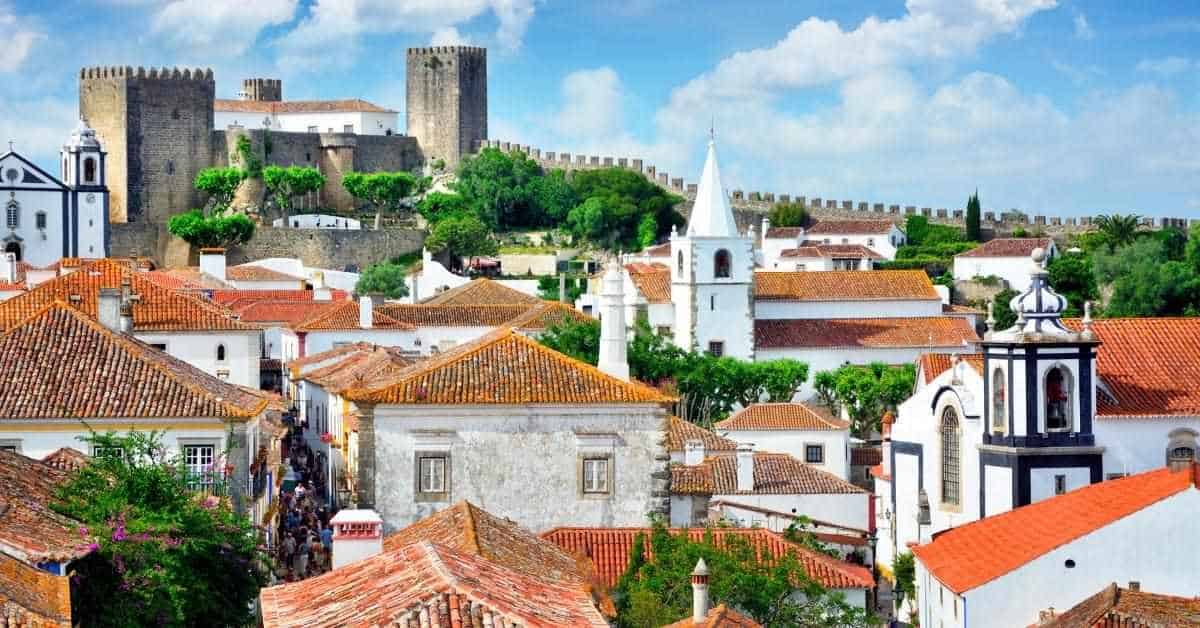
Wait, we said that Óbidos is the name of the whole region, didn't we? Yes, but this is also the name of the first town you will stop at - the town of Obidos. A sweet walled town built in the 14th century AD, with picturesque alleys that lies in the west of Portugal and at a distance of less than 100 km from the capital city of Lisbon (which in free translation is about three quarters of an hour's drive).
Óbidos is built in such a way that in its center is the historic main street with a wonderful atmosphere and colorful stalls where the locals sell their wares - handmade leather goods, ceramic vessels, woven baskets, lace and more. Since this is the first stop, it is a wonderful opportunity to taste the famous drink called "Zinzinia" by the locals - a cherry liqueur that is produced from a special variety that grows in the Ubidosh region and is traditionally served in small cups made of chocolate.
From the main street, you can continue walking through the side streets, where you can admire the many buildings, most of them painted white with red tiled roofs and blue and yellow windows that give the area a special color.
5 sites and attractions that should not be missed
The castle of Obidos - A magnificent castle from the 8th century AD that was built by the Moors due to its strategic location, which explains why the king of Portugal later chose to establish the historic city in this place.
the old City - If you enter the city through the Porta da Vila gate you can say to yourself "Welcome to the old town of Óbidos". You will get to know this area on foot, by walking through the picturesque alleys, where you will be impressed by ancient buildings, stone pavements, fortified walls and beautiful viewpoints.
Queen's Hot Springs Caldas da Rainha - It is actually a pleasant area attached to the town of Óbidos, which is known mainly for its hot springs, which are attributed various healing properties. The springs are surrounded by a 19th century park with museums, galleries and more.
The Municipal Museum - A fascinating place where works of art, weapons, archaeological finds and special items, belonging to creators, businessmen, artists and local merchants. These works span over many hundreds and make it possible to get to know the history of Óbidos from a unique angle.
The lagoon of Obidos - A clear lake connected to the ocean by a small strait alongside spectacular beaches and beautiful landscapes. In this area there are also magical places to stay and you can spend the night there.
Stop 2: Nazara
Before we tell about the next destination, an interesting fact: the coastal town of Nazareth is named after the city of Nazareth, known as the city where the gospel was given and named after Jesus, the father of Christianity.
So, symbolically in the city of Nazara there are religious and heritage sites, such as the Church of Our Lady dedicated to the Virgin Mary who, according to legend, conceived her famous son in this city. In addition to being spiritually important, it is a beautiful coastal town whose residents are still engaged in the craft of fishing and their fresh goods partly reach the local restaurants so it is also a great culinary experience.
5 sites and attractions that should not be missed
bathing beaches - The beaches of Nazaré are known as the most beautiful in Portugal and among the most beautiful in the world. These are wide and white sandy beaches next to clear turquoise water in which there are a variety of marine activities alongside the most enjoyable activity of all - belly-flopping, of course.
Fishing tours - The city itself is based on the fishing industry so it goes without saying that one of the most recommended activities is joining one of the fishing tours where you can learn how to fish for yourself and earn your dinner with great effort.
Water sports: diving and surfing - As expected from a beach town that respects itself, you can enjoy a multitude of marine activities, the recommended of which are diving in the clear waters and surfing the waves (especially in winter when the waves are very high). For sure, it will be photogenic, so take pictures.
Views and viewpoints - In Nazareth, there are quite a few panoramic observation points from which a breathtaking view can be seen. Among the recommended places you will find "Citio Cliff"
restaurants - Portugal is considered a paradise for the Israeli palate in general, but Nazara is undoubtedly the highlight in this area, so if you are on a diet it is time to take a short break and recalculate your route. In Nazareth there are excellent restaurants that serve fresh, fresh food, mostly from the sea of course.
Stop 3: Batalia
A historic town that was founded by King João I of Portugal and is known, among other things, for its magnificent Gothic monastery, Santa Maria de Vitória Monastery, which is one of the largest monasteries in Portugal and serves as one of the most prominent symbols of Portugal's independence. This monastery is a UNESCO World Heritage Site.
5 sites and attractions that should not be missed
A tour of the old city - Like any historical town, Batalia also has a historical center that tells the story of the city's rich past. Since the town itself is not big such a tour can be not very long and after you stop for a light coffee break you can continue to the following sites.
Convent of Santa Maria de Vittoria - As mentioned, it is one of the iconic symbols of Portugal's victory over Spain. Its construction began in 1386 and lasted for about 150 years, since then it has gone through many upheavals such as a terrible earthquake and more. It was only partially restored, but the remains that remain allow learning about the impressive history of the place.
Duarte's Pantheon - also known as Capelas Imperfeitas, meaning "incomplete chapel" or "unfinished chapel" and this is because the construction of the chapel began in 1434 but was never completed (at least not in its original form) following the death of King Duarte in 1437.
Community Saint Mamede - A community of about 3500 members and sits on the São Mameda plain, which is near the town from the east. In the area of the settlement there are wonderful rock formations, steep slopes, caves and sinkholes that are highly recommended to see.
The disgrace page of the battle Pelourinho da Batalha - a relatively new monument which quickly became one of the symbols of the town. It stands tall with a cross on its head, so you can spot it from afar and navigate to it.
Stop 4: Fatima
Last but not least is the city of Fatima, which is among the most important cities for the Catholic community in Fatima, and if in the past it was considered a tiny and anonymous village, today it is one of the most well-known and visited places, at least among the locals.
The reason for this is a prophetic story which is told like this (a fact that happened, so it was. Maybe): three shepherd children who were walking outside the village one day met a lady who came down from lightning and sat on a tree trunk. The lady gave them an important message about the future and they described her as someone who was "brighter than the sun". This scene was repeated five more times and after the children told about what had happened, the residents recognized her as the Holy Virgin Mary.
The last time was on 13.10.1917 when tens of thousands of residents gathered and witnessed the meeting of the Virgin with the shepherds' children. They later said that after the meeting the sun rose to the sky and fell to the ground several times before continuing on its normal course - which later became known as the "miracle of the sun" and attracted believers and curious people to the area. Later, a large chapel was built near the place of the apparition, which is attributed healing properties, especially for the blind.
5 sites and attractions that should not be missed
Church of Our Lady of Fatima - a holy complex with the huge chapel that was built at the place of the apparition. This is one of the most famous sites among the Catholic community and it is surrounded by an atmosphere of holiness and miracles.
walking on the knees - It sounds strange, and maybe it is, but one of the most well-known rituals in Fatima is walking on one's knees along a long path at the end of which stands the Chapel of the Epiphany. Welcome to try.
Wax body parts - Further to the strangeness of the city that grew out of the story of the virgin, near the chapel you will find pieces of wax in the shape of different organs that you can buy to throw into the fire afterwards. According to the belief, this action will heal the painful or sick limb.
The Consulate Museum - A museum that presents an impressive collection of art details and sacred writings from different countries, mostly dedicated to the study of culture and religion alongside various artistic periods. Among others, there are several works dedicated to the story of the apparition of the Virgin to the shepherds' children.
More museums - In Fatima there are quite a few other museums, some of which are also a successful place for family entertainment. Among other things, you will find the Epiphany Museum, the Wax Museum and the Olive Oil Museum in the city.