

Somewhere in the middle of the sea, about a third of the way from Portugal to the American continent, lie the Azores Islands - a perfect adventure for couples, families and groups of all kinds, who desire a fascinating exotic destination without moving significantly away from home.
The areas of the nine spectacular islands (Sao Miguel is the main island and where the capital city of Porto Delgado is located) spread over about 2,300 square meters and are home to about a quarter of a million smiling, calm and warm residents. The islands are under the autonomy of Portugal and are characterized by a unique tropical Mediterranean climate , an intriguing volcanic system, unusual landscapes and a colorful and addictive atmosphere.
The islands were first settled around the 15th century, probably by European sailors trying to reach new continents. They formed the base of the Spanish fleet in the great naval war between the British and the Spaniards (16th and 17th centuries) and were even the refueling base for US planes sent to help in the Yom Kippur War, after no other country except Portugal agreed to this.
The Ozaris excel in growing exotic fruits, the finest wine grapes and tobacco. They operate hundreds of unique attractions such as the tea forests, "search for the treasure" trips, interesting journeys between windmills or golf courses and of course watching (must!) whales and dolphins.
The nine Azores are: São Miguel, Santa Maria, Terceira, Graciosa, São Jorge, Pico, Faial, Flores. and Corvo.
There is a very wide and diverse range of Accommodation options on the various islands. You can choose from large hotels, apartment hotels, guest houses, old boutique mansions (an accommodation style called Pensão or Residencial), family villas and more. Only in recent years have a number of five-star hotels been established, due to the growing demand. The regions are known for a particularly high level of service, so there was no need for hotels with a maximum star rating until now. You will find most of the five-star hotels on the island of Tricera.
A cheaper option is to rent a small Airbnb apartment or a room in a guest house. Sao Miguel is considered a leader in the field of new hotels (mainly in Punta Delgada, the capital), although a large number of new accommodation complexes have also been established in the cities of Angra (Terceira) and Horta (Fayal). You can find suites, special rooms for families (at "Family Friendly" prices for extra beds), cheap youth hostels (on the islands: Sao Miguel, Terceira, Pico, Santa Maria and Sao Jorge) and even successful camping sites that offer outdoor recreation accompanied by fishing and barbecue.
The regional cuisine is based on a number of collective dishes for all the islands, alongside personal cuisines for each individual island. This is a wonderful place for food tours and culinary journeys, where you can open up to many new flavors and cooking techniques. The predominant fresh fish here are tuna, swordfish and mackerel which are usually grilled. Lobsters, crabs and oysters (in São Jorge only) characterize the stews and fish soups and are often on the plate alongside rice and mashed potatoes. If you want to eat fresh oysters outside of Sao Jorge, you can catch crazy fishing safaris that operate from Sao Miguel and during which you will spend a half day excursion accompanied by oyster fishing.
The meat here also gets a place of honor and is present in several fine dishes. The steak cuts are known for their taste and in addition you can also find a number of unique gourmet delicacies such as a certain appetizer called "Blood Pudding".
Regarding cheese, there is a fine cheese that you can find in all the islands and it is called Sao Jorge cheese. This cheese requires skillful handling and a precise ripening time, in which many flavors and textures are created. In fact, almost every typical regional meal opens with fresh cheese and spicy red pepper puree.
Furnash's cosido - this is one of the most symbolic and typical dishes of the islands and is very reminiscent of the beloved chowder. This is a meat and vegetable stew cooked by the power of the geothermal heat found underground and creates a satisfying and delicious meal.
Portugal in general is very well known for its fine wines, but Vardalho wine is produced here, which is considered one of the most desirable wines in the world. Wine production takes place on the islands of Pico, Graciosa and Terceira. In addition, you will find here good beer and special soft drinks such as "Kima" - carbonated passion fruit juice, fruit liqueurs and good brandy. In Sao Miguel there are also exotic tea plantations that will make you a celebration from the usual cup of tea.
And what for dessert? Well, fresh pineapple in its shapes and styles is considered the popular dessert (just like watermelon and bulgarian here), but you can also find plenty of sweet pastries, cakes and sweets in an endless variety. For the advanced, there is also "the bread from Fornash" which is a local sweet bread, slightly sweeter than brioche.
mature The unique geological appearance, you can be exposed here to a large number of activities on foot, in vehicles or SUVs, by bicycle, on horses, climbing, water sport, sailing, diving and more. All these are accompanied by mild weather throughout the year, fine wine and good food, mesmerizing wildness alongside ideal peace.
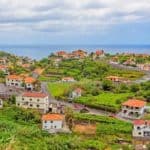
where the capital city of Punta Delgada is located. Most travelers prefer to start their trip here and proceed to the other islands by rental car or boat. São Miguel is an island that stands out mainly due to its many lakes, some of which are ideal for fishing, others function as hot springs and in addition there are successful beaches and a lot of scenery. In Sao Miguel there are also many excellent shops and restaurants and within the city itself it is worth visiting the churches of Sao Sebastiao and Sao Jose, the Forte de S. Bras, the arched gates at Portas Da Cidade and the Carlos Machado Museum.
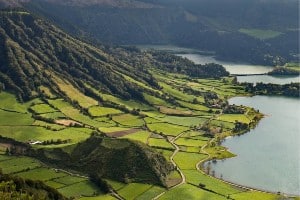
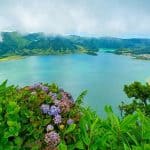
In terms of the many nature trips offered by the island, don't miss Sete Citades which contains two "twin" lakes - one blue and one green and both are inside a huge volcanic crater. Another famous place is also the beautiful Pogo. It is also advisable to take a walk in the Furnas Valley and reach its hot springs and the Terra Nostra Botanical Park.
Home to spectacular blue hydrangea flowers, a lively marina and excellent tourist complexes in the central city of Horta. On this island it is advisable to visit the huge caldera crater, the Volcán de los Capelinhos volcano and of course go on a whale and dolphin watching tour.
Considered one of the most populated - both in people and in the forests. The capital of the island Volcán de los Capelinhos is characterized by an ancient and spectacular appearance and is considered a UNESCO World Heritage Site. In the city you can visit many monasteries, churches, palaces and museums. Outside you will find wild landscapes, many diving companies, tours into forests and hot springs and more. It is worth coming To the Algar de Carvao cave system and to the Serra do Cume lookout overlooking the bay of Praia da Vitória and its basalt areas.
The second largest island after Sao Miguel and it is characterized by lava fields that hardened and turned the ground very dark. The island's volcanoes (2,350 meters on the highest peaks) make it the highest regional island and many challenging climbing trips can be made here. You should also visit the whale museum, the maritime museum and the wine museum.
A warm island full of colorful desert landscapes. The special sites here are the "red desert" Barreiro da Faneca and the impressive Meloas waterfall. Here you will also find excellent beaches such as the Gulf of Sao Lorenzo surrounded by vineyards that kiss the sea itself and the white Formosa beach which is unique in its appearance to the islands.
A small island with white volcanic rocks, picturesque vineyards, spectacular wheat fields, lagoons and a mesmerizing abundance of windmills. It is worth visiting Mount Nossa (Monte de Nossa Senhora da Ajud) which has a wonderful view of Santa Cruz, the capital city, and also the stalactite and sulfur cave system Furna do Enxofre and its lake.
Offers a wide variety of landscapes: open fields, cliffs, forests and pejas: tongues of land breaking into the sea and on them unique vegetation. Some of these tongues include orchards and corn and sweet potato fields. It is worth going to the coffee bean fields and to an area called Fajã de Sao Joao which provides a beautiful countryside view of black stone houses and farms. Hikers will be happy to reach the top of the Pico Da Esperanca island from where you can look out over the nearby islands.
A wild island that looks as if a human foot has never set foot on it. It offers volcanic craters that have turned into magical lakes, valleys and forests, carpets of flowers and landscapes that look like something out of a fairy tale. It is worth exploring the Sete Lagoas, an area where there are seven special lakes and the Fajazinhha cliff which includes no less than 20 waterfalls. The highest of them rises to 300 meters! In another waterfall called Poco do Bacalhau you can also have fun wading.
It is considered the smallest and most isolated and houses only about 450 inhabitants. The visit here provides a kind of journey through the time tunnel and brings the travelers together with vineyards and wineries that look like they are from another era, the caldera of the Caldeirão volcano and fields of special volcanic cones. Also, the windmills and the many pastures are considered the symbols of the island.
On the islands you can find several car rental companies, some of them international. You can make the rental in advance and pick up the car at the airport as long as it is an international company with an Israeli branch. The minimum driver age required depends on the rental company and sometimes the minimum for driving will be 21 or 25 and sometimes also 30, when this is accompanied by at least one year of driving experience. Some companies even limit the maximum age to 70-75 years.
Driving on the islands is relatively comfortable, flowing and almost without special loads (locals rarely drive). But sometimes the roads are very narrow and require great care. Therefore, if possible, choose a small car and avoid driving at night, also due to the heavy fog in the mountains. There is a speed limit on highways of 120 km/h. It should be taken into account that fuel prices on the islands are similar to those in Israel. In addition, there are far fewer gas stations and the opening hours vary.
It is important to consider the transition between the various islands even without a car: domestic flight systems are operated on the islands by the local airline SATA and with varying frequency, according to the size of the island. This is a convenient and fast option, but of course more expensive. The earlier the booking of the flights happens, the lower the prices.
Another option is to move between the islands using relatively comfortable ferries and at slightly lower prices than the flights. Other options are traveling by bus or renting motorboats/jet skis.
To get from Israel to the Azores you need Flight to Lisbon and from there a continuing flight to the islands. Most flights land in Sao Miguel, but you can also find flights to the other islands. Therefore, you can choose between:
Direct flight to Lisbon through the companies El Al, Arkia and Tap Portugal. Direct flights occur mainly in the hot season, although it is also possible to catch a few flights throughout the winter (some with an intermediate stop).
A connecting flight to Lisbon via another European destination, or a connecting flight to the Azores themselves (depending on the company). In some cases throughout the year you will find direct flights from Israel to Punta Delgada through some European airline.
A low-cost flight with one or two stopovers in selected European destinations, using the companies SATA, TAP, Air Berlin, Primera Air, Jet Airplay, easyJet and Ryanair. Low-cost flights are currently considered the most popular, cheapest and most available option among the three and the cost of the flight amounts to 50-200 euros per one-way ticket.
From Lisbon there is a connecting flight to the islands via the regional airline SATA, or via the Portuguese airline TAP. The total duration of the flight is about 7 hours: five of them to Lisbon and the rest to São Miguel.
Due to the typical tropical-Mediterranean climate, the island's temperatures vary on an hourly basis throughout the day. A sunny morning may change to heavy clouds and even rain until noon and change to dry and cool weather in the evening. However, these are not particularly significant differences and all you will have to do is to constantly follow the forecast. In the event that heavy clouds appear, it may cancel domestic flights at short notice and also significantly impair the range of vision, so that you can only see a few meters in the radius where you are standing.
The islands are mainly busy in the summer months (June to September) and tourists from all over the world come for their annual vacation. The hotels are fully booked and the streets are full of a good and lively atmosphere. During this period there are also several "obligatory" festivals such as the St. John's Festival held in June on Terceira Island, the Horse Riders Parade and the White Bean Carnival in Sao Miguel and the Whale Week held in August on Pico Island.
If you are looking for peace, a relative minority of tourists and top-of-the-top service (the locals thank every tourist who comes in the off-season and contribute to their livelihood by providing excellent personal service), the transition seasons of March-May or the month of October may be particularly suitable for you. Also, every year in April, a unique date is celebrated in Porto Delgado called Senhor Santo Cristo dos Milagres which is considered a huge annual event.
- The 27 best hotels in Lisbon -
- The 14 best hotels in Porto -
- The 14 best hotels in Óbidos -
- The 13 best hotels in Deira -
- The 14 best hotels in Sintra -
- The 12 best hotels in Cascais -
- The 14 best hotels in the Algarve -
- The 14 best hotels in the Azores -

 Hebrew
 Arabic
 Chinese (Simplified)
 Dutch
Dutch English
 French
 German
 Italian
 Portuguese
 Russian
 Spanish